The approach matters as much as the result
For most patients, I perform lower eyelid rejuvenation from the inside of the eyelid, then tighten and refresh the skin with a CO₂ laser. I rarely use an external skin incision anymore, and when I do, I am deliberately conservative.
The reason is simple. Lower eyelid surgery is judged by one thing above all: do your eyes still look like your eyes? The wrong approach, or an aggressive one, can trade puffy lids for a permanently altered eye shape. In my 25 years of cosmetic surgery, I have seen far too many of those outcomes walk into my office from other practices. Most of them were avoidable.
What actually ages in the lower lid
The aging lower eyelid is usually a combination of problems, and each needs its own solution:
- Fat bulging (“bags”). The fat pads that cushion the eye push forward as the supporting septum weakens.
- The tear trough hollow. A groove forms between the lid and cheek, which makes bags look deeper and the eyes look tired.
- Skin quality. Thin, crepey skin, fine lines, and discoloration. In most patients this is a texture problem, not a large amount of excess skin.
- Lid laxity. Some lids become loose and less supported, which matters a great deal when planning surgery.
In many of the patients I see, bulging fat and skin quality matter more than excess skin. Treating every lower eyelid as a skin-excess problem can lead to unnecessary tissue removal.
Transcutaneous lower blepharoplasty and canthal support
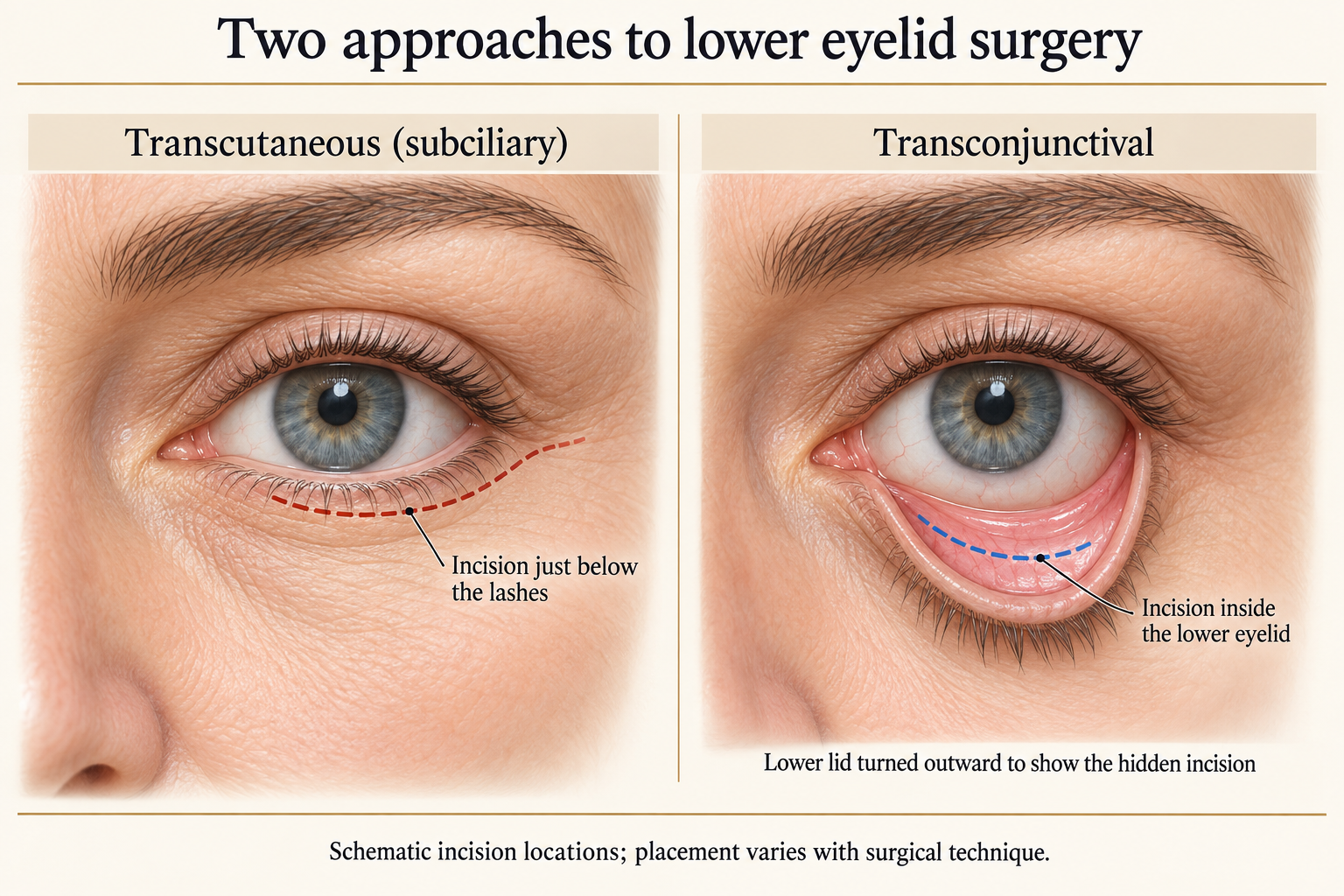
A transcutaneous (subciliary) blepharoplasty uses an incision just below the lash line. The surgeon lifts the skin, and often the muscle beneath it, then removes fat and trims skin before closing.
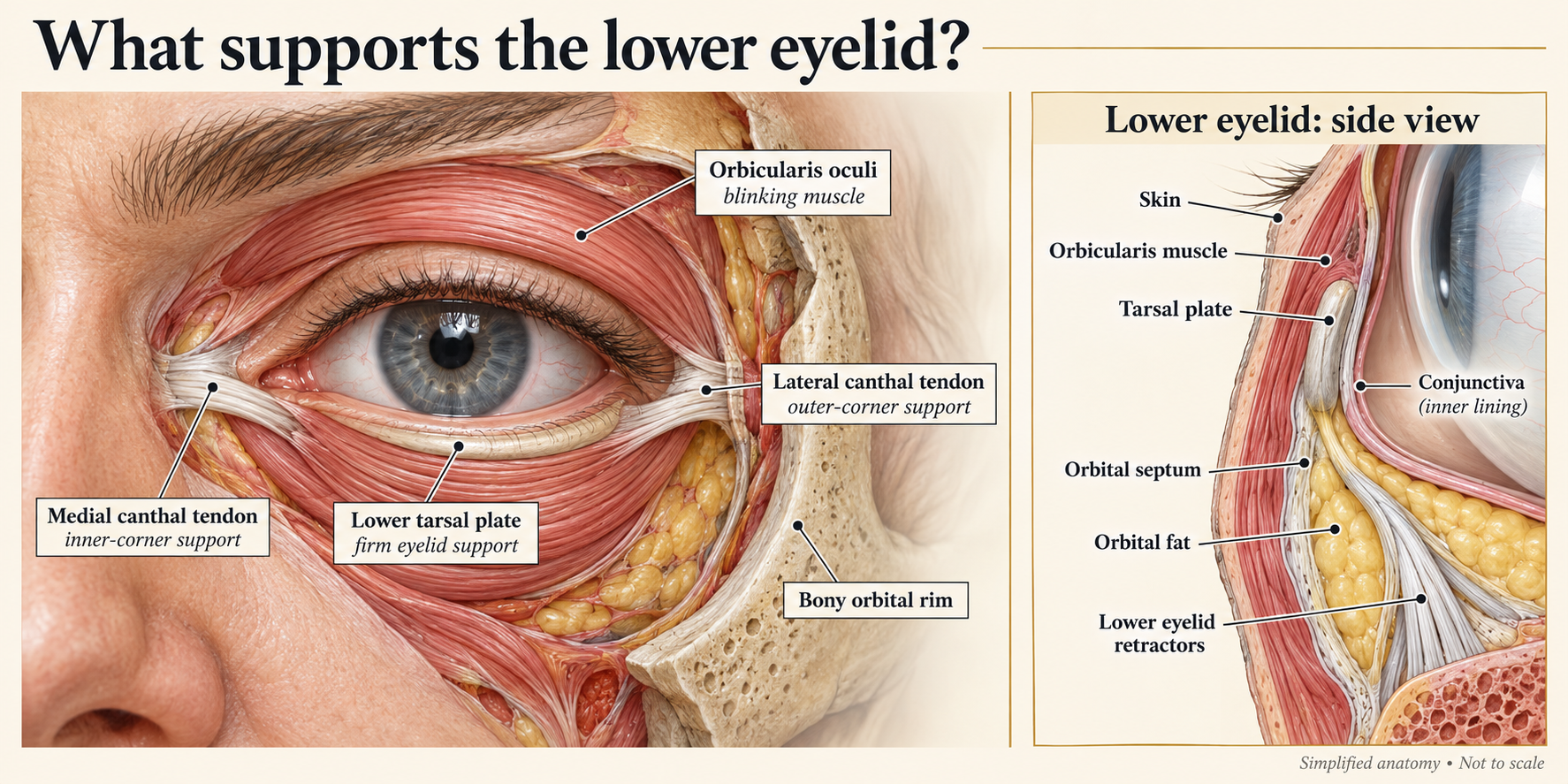
A concern with the skin-muscle approach is its effect on the supporting layers of the lower lid. Dissection, scarring, and excessive skin removal can contribute to downward pulling as the tissues heal. Patient anatomy and pre-existing lid laxity also matter.1,6 Possible complications include:
- Lower lid retraction, with white showing below the iris (“scleral show”)
- A rounded, sad, or “surgical” look to the eye
- Ectropion, where the lid pulls away from the eye and turns outward
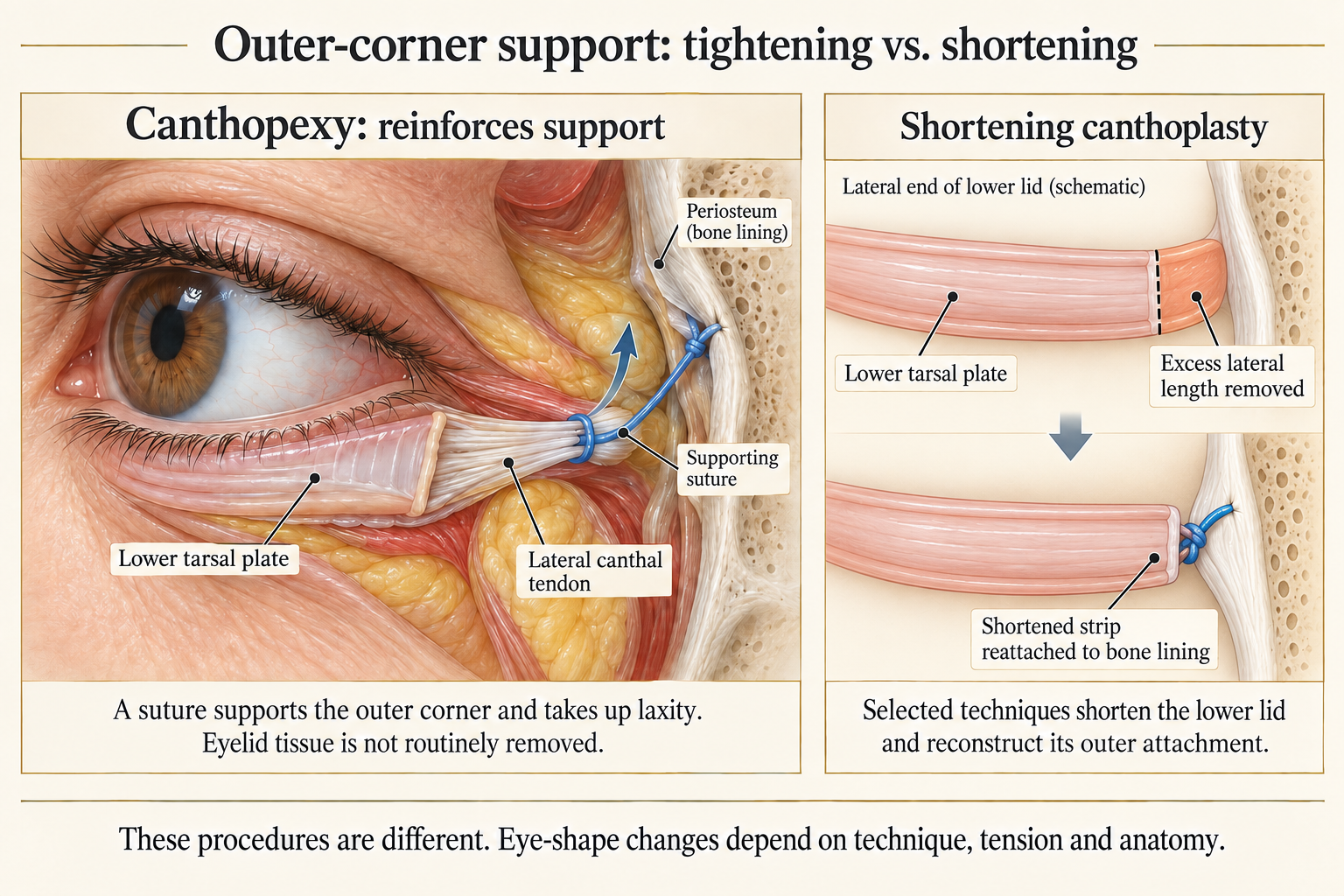
To prevent this, many surgeons who routinely use the skin approach add a lateral canthopexy or canthoplasty. These procedures tighten or reattach the outer corner of the lower lid to the bone of the orbit, essentially cinching the lid to hold it in place. Some published series recommend canthal support as a routine part of every transcutaneous lower blepharoplasty.5
Canthal support may address pre-existing laxity as well as help prevent postoperative malposition. My concern is using it automatically without explaining the individual patient’s anatomy and needs.
When the fix becomes the problem
Canthal tightening has legitimate uses. When the tension or position is inappropriate, it can alter the outer corner and eye shape.7,8 Patients I see for consultation after these procedures may describe:
- A shortened lower lid. The horizontal length of the lid is reduced, so the eye looks smaller.
- Blunted or rounded outer corners. The natural, sharp almond point of the outer corner is lost.
- A changed eye shape. Some eyes look pulled, tight, or “cat-like”; others look round and startled.
- Asymmetry between the two sides.
- A lid that sits too tight or too low against the eye, especially in patients with prominent eyes or flat cheekbones.6
These changes can be genuinely disfiguring, because the eyes are the first thing people notice. They are also among the hardest problems in facial cosmetic surgery to revise. Scar tissue, lost skin, and a reset tendon cannot simply be put back.
Prevention starts with choosing and performing an approach suited to the patient’s anatomy. In a small comparative study of 36 patients, the transcutaneous skin-muscle group had more canthal rounding and ectropion than the transconjunctival laser group. The authors also noted longer postoperative care with laser resurfacing and concluded that either approach may be appropriate in selected patients.4
My preferred approach: transconjunctival blepharoplasty with CO₂ resurfacing
In a transconjunctival blepharoplasty, the incision is placed on the inside of the lower eyelid, leaving no external incision scar. In my practice, this incision usually heals without sutures. The approach avoids a skin-muscle flap at the front of the lid, helping preserve its support. It is designed to protect natural eyelid position and shape, although no approach eliminates the risk of complications.1,3
Through this approach I can:
- Remove excess fat conservatively, to flatten bags without hollowing the eye.
- Reposition fat into the tear trough when appropriate, softening the lid-cheek junction instead of creating a sunken look.
Then I address the skin with fractional CO₂ laser resurfacing of the periorbital area. The laser removes damaged surface skin and stimulates new collagen, which tightens the skin, smooths crepey texture, and improves fine lines and discoloration. The tightening continues for months as collagen remodels.
A randomized study, completed by 44 patients, found that transconjunctival fat removal alone improved lower-lid bulging in 92% of subjects, while wrinkles worsened in 46%. Adding CO₂ resurfacing improved wrinkles, and no lid retraction occurred in that study. These are findings from a specific study, not a guarantee for an individual patient.2
The combination addresses fat from the inside and skin quality from the outside. In my practice, many patients treated this way do not need canthopexy. Patients with significant laxity or other support concerns may still benefit from an individualized canthal procedure.
Laser resurfacing requires healing time and careful sun protection, and not every skin type is an ideal candidate. Risks include prolonged redness, pigment changes, infection, and scarring. Surgery can also cause dry-eye symptoms or lid malposition. We review these risks and the alternatives at consultation.4,7
When I still use a skin incision
There is a small group of patients who truly have a large excess of lower lid skin, more than a laser can reasonably tighten. For them, a transcutaneous approach is appropriate, and I use it.
Even then, my philosophy does not change:
- I remove skin conservatively. Excessive skin removal can be much more difficult to correct than residual laxity.9
- I still resurface with the CO₂ laser, so the laser does part of the tightening work and less skin has to be cut away.
- I aim to preserve natural eye shape and avoid routinely altering the outer corner.
The goal is always a refreshed version of the same eyes, never a different pair.
Examples of lower eyelid distortion
The photos below show patients who came to me after lower eyelid surgery performed elsewhere. Each shows the kind of lid shortening, corner blunting, or shape change described above.
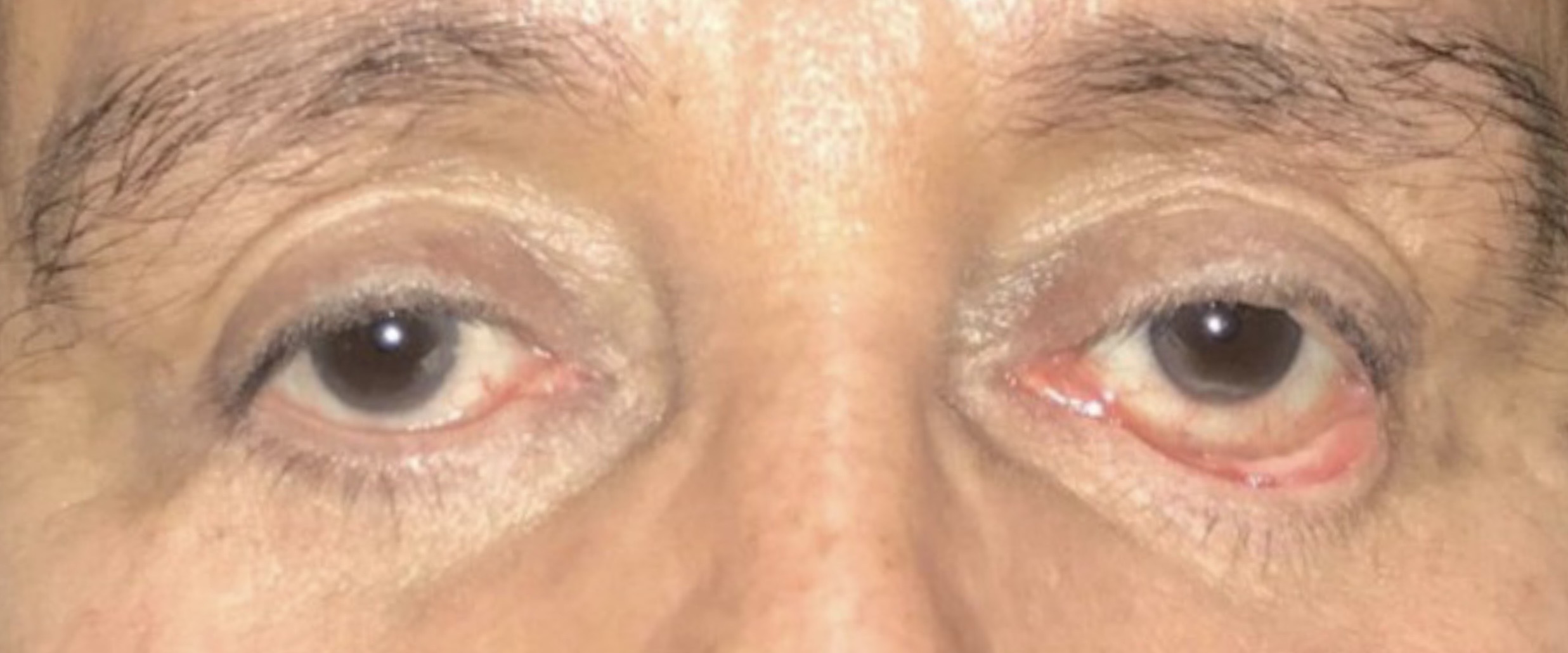
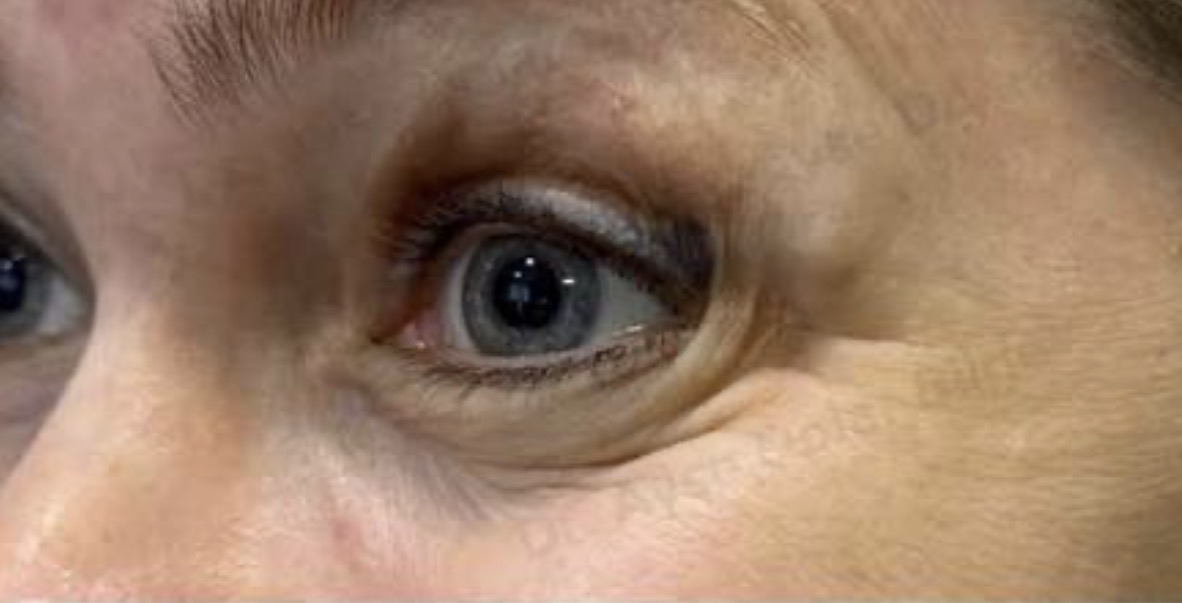
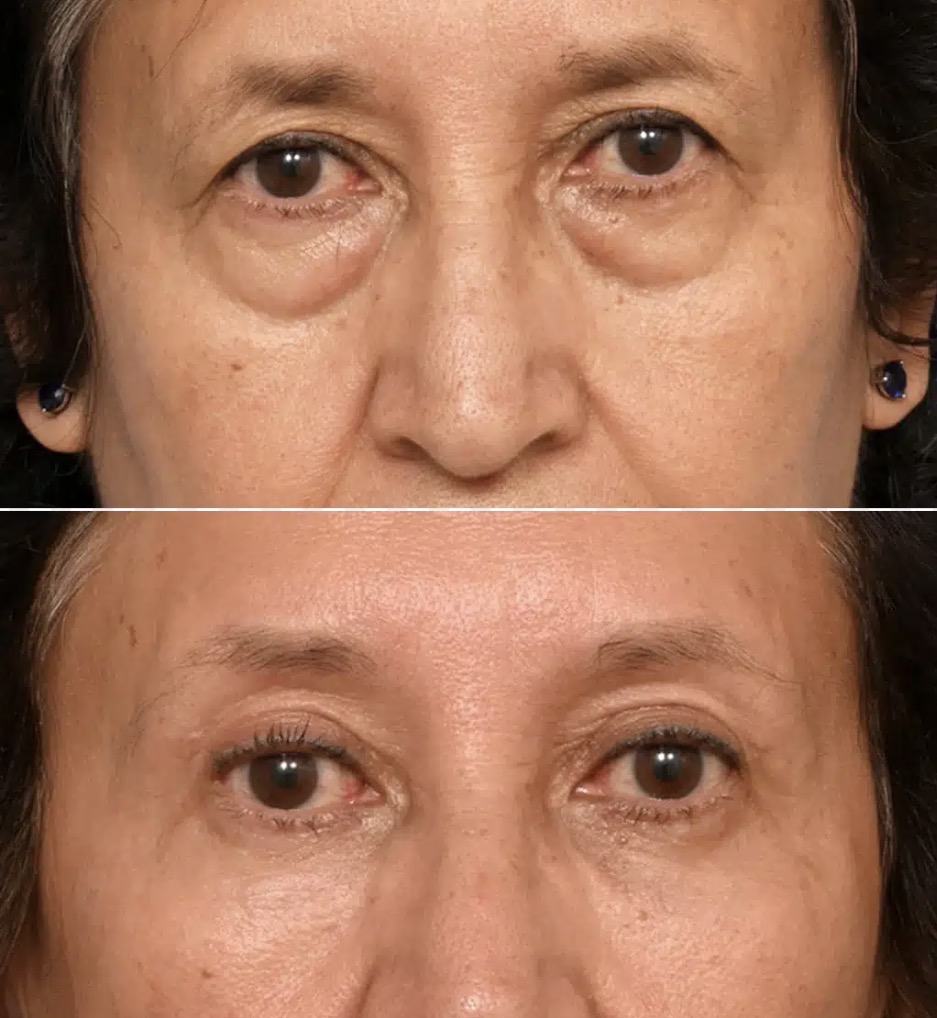
All photographs are shared with written patient consent for educational use.
Questions to ask before lower eyelid surgery
If you are considering lower blepharoplasty, ask your surgeon:
- Will the incision be inside the lid or on the skin, and why for my eyes specifically?
- Do you routinely perform a canthopexy or canthoplasty? If so, why do I need one?
- How will you treat my skin quality: excision, laser, or both?
- Will you remove my fat, reposition it, or both?
- Can I see before-and-after photos of patients with eyes like mine, including the outer corners?
Preserving your natural eye shape
My goal is a rested appearance with your natural eye shape preserved. For many of my patients, transconjunctival blepharoplasty combined with CO₂ laser resurfacing is the approach I prefer. When skin excision is needed, I tailor the plan to the amount of excess skin, lid support, skin type, and healing risks. Both approaches have appropriate uses; the plan should fit the patient.
I am Dr. Albert Carlotti, a Fellowship Trained cosmetic surgeon with more than 30,000 procedures performed over 25 years. If you are considering lower eyelid rejuvenation, or are unhappy with a previous result, I invite you to schedule a consultation at BellaNova Cosmetic Surgery in West Palm Beach. Call (561) 834-6682.
Frequently Asked Questions
How do I get rid of puffy bags under my eyes?
Persistent under-eye bags are often caused by prominent fat pads. Sleep, cold compresses, and eye creams may help temporary fluid puffiness, but they do not remove those fat pads. Lower blepharoplasty can provide long-lasting improvement in suitable patients. I usually approach the fat from inside the eyelid, without an external incision scar.
Can under-eye bags be removed without a visible scar?
A transconjunctival incision is inside the lower lid, so it does not leave an external incision scar. In my practice, it usually heals without sutures. When appropriate, I treat skin texture and fine lines with fractional CO₂ laser resurfacing. Laser treatment has its own healing requirements and risks.
What is the difference between transconjunctival and transcutaneous blepharoplasty?
A transcutaneous approach uses an incision below the lashes and may lift a skin-muscle flap to reach the fat. A transconjunctival approach reaches the fat from inside the lid, avoiding that external flap. The choice depends on skin excess, lid support, anatomy, and the planned fat treatment. Neither approach is free of complications.1,4
Will lower eyelid surgery change the shape of my eyes?
Preserving your natural eye shape is the goal. Excessive skin removal, scarring, disruption of support, or inappropriate canthal tension can change eyelid position or shape. My approach is designed to reduce these risks, but no operation can guarantee that eye shape will remain unchanged.4,7
What is a canthopexy, and do I need one?
A canthopexy tightens the outer corner of the lower lid by anchoring it to the bone of the orbit; a canthoplasty detaches and resets it. Some patients with significant lid laxity genuinely need canthal support. But many surgeons add it routinely to skin-incision blepharoplasty to prevent the lid from pulling down.5 If a surgeon recommends one, ask why it is necessary for your eyes specifically.
Why add CO₂ laser resurfacing to eyelid surgery?
Fat treatment addresses bags, while resurfacing addresses skin texture and wrinkles. A randomized study found better wrinkle improvement when CO₂ resurfacing was added; no lid retraction occurred in that study. Those results do not mean the combination is risk-free.2
What is recovery like after transconjunctival blepharoplasty with CO₂ laser?
In my practice, patients commonly experience 7–10 days of swelling or bruising, with laser redness often lasting 2–4 weeks; some take longer. Some patients feel ready to return to work after about a week. My postoperative protocol includes strict sun protection for six months, including SPF 45 sunscreen once the treated skin has healed enough for its use, reapplied as directed. Follow the individualized wound-care and sun-protection instructions we provide.
What type of anesthesia is used for lower eyelid surgery?
Because we are operating inside the eyelid and close to the eye, I perform this procedure under general anesthesia to limit movement and discomfort, including during CO₂ laser treatment. The anesthesia plan is individualized and reviewed with the anesthesia team. Read our anesthesia safety guide.
How long do the results last?
Lower-lid fat treatment can provide long-lasting improvement, but the surrounding tissues continue to age. Sun protection and skin care help maintain the skin result. My postoperative instructions include avoiding nose blowing for six weeks; patients should follow their own surgeon’s specific instructions.
Can a bad lower blepharoplasty be fixed?
Revision can often improve a complication, but a complete return to the original eye shape may not be possible. Repair may require scar release, restored support, or additional tissue. For severe cases, I typically refer patients to an oculoplastic surgeon who regularly performs these repairs. Prevention and careful planning are essential: ask about the incision, any proposed canthal support, and before-and-after results before choosing surgery.
Am I a good candidate for transconjunctival blepharoplasty?
Good candidates have bags from fat, crepey or wrinkled lower-lid skin, and no large excess of skin. At consultation I also evaluate lid laxity, how prominent your eyes are, cheek support, and dry eye, because each affects which approach is safest. Patients with truly large skin excess may need a conservative skin excision as well.
How much does lower eyelid surgery cost in West Palm Beach?
At BellaNova, lower eyelid surgery starts at approximately $6,500. The final cost varies with the treatment plan and any additional procedures. We require a comprehensive in-person examination before providing an individualized treatment plan and quote; we do not provide individualized quotes by phone.
References
- Jacono AA, Moskowitz B. Transconjunctival versus transcutaneous approach in upper and lower blepharoplasty. Facial Plast Surg. 2001;17(1):21-27.
- Carter SR, Seiff SR, Choo PH, Vallabhanath P. Lower eyelid CO2 laser rejuvenation: a randomized, prospective clinical study. Ophthalmology. 2001;108(3):437-441.
- Seckel BR, Kovanda CJ, Cetrulo CL Jr, et al. Laser blepharoplasty with transconjunctival orbicularis muscle/septum tightening and periocular skin resurfacing: a safe and advantageous technique. Plast Reconstr Surg. 2000;106(5):1127-1141.
- Griffin RY, Sarici A, Ozkan S. Treatment of the lower eyelid with the CO2 laser: transconjunctival or transcutaneous approach? Orbit. 2007;26(1):23-28.
- Codner MA, Wolfli JN, Anzarut A. Primary transcutaneous lower blepharoplasty with routine lateral canthal support: a comprehensive 10-year review. Plast Reconstr Surg. 2008;121(1):241-250.
- Hester TR Jr, Douglas T, Szczerba S. Decreasing complications in lower lid and midface rejuvenation: the importance of orbital morphology, horizontal lower lid laxity, history of previous surgery, and minimizing trauma to the orbital septum: a critical review of 269 consecutive cases. Plast Reconstr Surg. 2009;123(3):1037-1049.
- Lelli GJ Jr, Lisman RD. Blepharoplasty complications. Plast Reconstr Surg. 2010;125(3):1007-1017.
- Gimenez AR, Rohrich R, Borab Z, Fisher S, Fagien S, Rohrich RJ. Safety and complications in lower eyelid blepharoplasty: a systematic review. Plast Reconstr Surg Glob Open. 2025;13(9):e7102.
- McCord CD Jr, Shore JW. Avoidance of complications in lower lid blepharoplasty. Ophthalmology. 1983;90(9):1039-1046.
Dr. Albert Carlotti has 25 years of experience in facial, breast and body cosmetic surgery, with more than 30,000 procedures performed. He teaches cosmetic surgery internationally and serves on the Board of Directors of the American Academy of Cosmetic Surgery. This article is educational and is not a substitute for a consultation.