At BellaNova Cosmetic Surgery, 4D Facelift means a surgical plan that studies the face in four dimensions: skeleton, muscle and fascia, skin, and surface quality. It is performed by Dr. Albert Carlotti at BellaNova's West Palm Beach surgical center, serving West Palm Beach and Palm Beach County.
The name matters because patients searching for 4D facelift find two very different things. One is a non-surgical laser brand. The other is the way Dr. Carlotti describes a surgical facelift that starts with the structures beneath the skin. This article is about the surgical version.
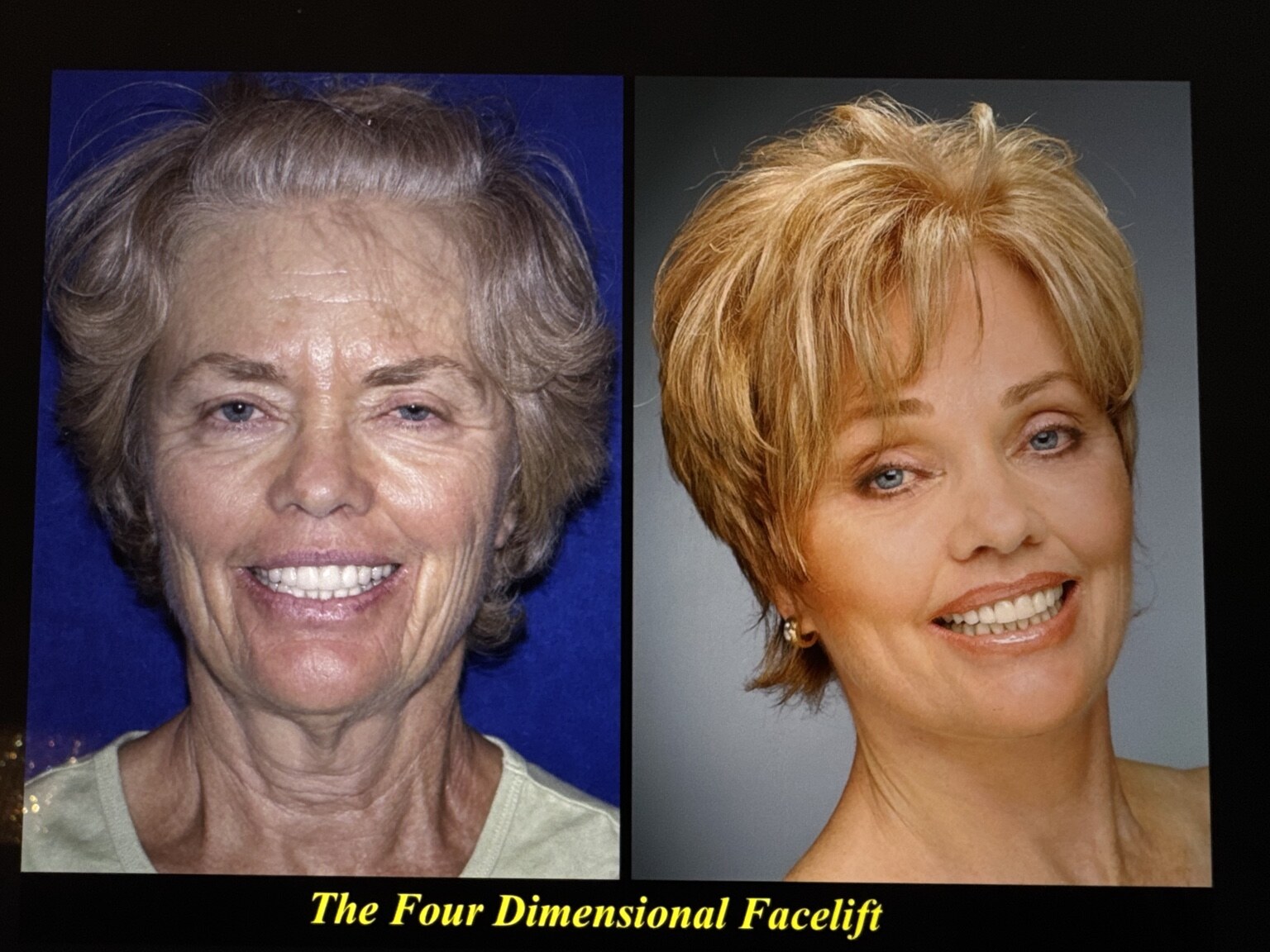
What does 4D mean in a facelift?
4D means the face is evaluated from foundation to surface: skeleton first, then muscle and fascia, then skin, then surface quality. Each layer can age differently, so treating only one layer can leave the result incomplete.
A traditional consultation often starts with the skin: where is it loose, how much can be removed, and where should the incision be hidden? Those questions matter, but they are not the whole face. Skin is the covering over a frame. If the frame has changed, or if the deep support has descended, skin removal alone creates a tight surface over an unresolved structural problem.
Why the skeleton comes first
The facial skeleton sets the platform for the face. A facelift can reposition soft tissue, but it cannot make a deficient chin, mandibular border, or midface support tissue that has descended.
A face can look older because tissue has descended. It can also look older because the platform under that tissue is weak: a small chin, a deficient mandibular angle, a flat midface, or a jawline that never had enough projection. If that question is missed, the operation may lift tissue onto a foundation that cannot support it.
Dr. Carlotti's 4D Facelift consultation considers chin projection, mandibular angle, jawline continuity, midface support, and the relationship between the face and neck. Those observations help shape a plan around the individual face and the patient's goals.
The muscle and fascia layer
The SMAS and platysma are the load-bearing layers of the lower face and neck. In a 4D facelift, this deep support is evaluated before the skin is closed.
In many patients, release and repositioning at this deeper level is what avoids a pulled skin look. Deep plane work may be part of the operation, but it is a technical component, not the product name. The larger plan is not "deep plane for everyone"; it is identifying which layer is responsible for the problem the patient sees.
When tethered tissue needs release, the goal is to move descended tissue in a direction that matches how the face aged. The face usually descends vertically and obliquely; it does not simply slide toward the ear. That is why a lateral pull can look swept or operated even when the incision is hidden well.
Skin should redrape, not hold the lift
Skin should be redraped after the deeper support has been corrected. It should not be the tissue carrying the lift.
When skin is used as the lifting structure, the result can look tight at the ear, mouth, and jawline. It can also relax early because skin stretches under constant tension. The 4D approach corrects support first, then redrapes the skin with the least tension needed.
This is the practical difference patients care about. They do not want a technical label; they want to look rested, defined, and recognizably like themselves. The skin incision and closure matter, but the result is built before the skin is trimmed.
Surface is the fourth dimension
Surface quality is the fourth dimension because a facelift changes shape but does not erase etched wrinkles, pigment, sun damage, or texture.
Fine lines, pigment, sun damage, and texture are surface problems. A facelift changes shape; it does not restore damaged skin quality. CO₂ resurfacing or other skin treatment may be added when it belongs in the plan, usually after the structural question is settled.
This sequencing matters. Laser or resurfacing can improve surface quality, but it cannot reposition jowls, repair the neck, or create a jawline. Surgery can restore contour, but it cannot make sun damage vanish. The best plan is often layered because aging is layered.
Not Fotona 4D, not liquid facelift
Fotona 4D is a non-surgical laser treatment name, and a liquid facelift uses injectable volume. BellaNova's 4D Facelift is surgical.
Those non-surgical treatments can have roles in the right patient, but they do not reposition descended facial tissue or rebuild skeletal support. Filler adds volume. Laser improves surface and tightening within limits. A surgical 4D facelift is an anatomy-first framework that asks what each layer needs before choosing the operation.
Who is it for?
The best candidate has facial descent, jawline softness, neck change, or surface aging that non-surgical treatment can no longer solve predictably.
Some patients need a facelift and neck lift. Some need eyelids or brow work because the upper third is what reads tired. Some need skeletal support through a chin implant, sliding genioplasty, or facial implant. Some need resurfacing more than lifting. The consultation is where those distinctions are made.
What happens at consultation?
The consultation is one-to-one with Dr. Carlotti and includes facial analysis, medical review, candidacy, options, risks, recovery, and a written quote.
Patients are encouraged to bring photographs of results they like, photographs of themselves at younger ages, and a clear list of what they do not want. The goal is not to sell every layer of the 4D plan. The goal is to determine which layers actually matter for that face.
Read the full procedure page: 4D Facelift in West Palm Beach.
Dr. Albert Carlotti has 25 years of experience in facial, breast and body cosmetic surgery, with more than 30,000 procedures performed. He teaches cosmetic surgery internationally and serves on the Board of Directors of the American Academy of Cosmetic Surgery. This article is educational and is not a substitute for a consultation.